The Mullein Plant: How to Identify, Grow, and Harvest Verbascum thapsus
Everything about the mullein plant (Verbascum thapsus): how to identify it, tell it from look-alikes like lamb's ear, grow it from seed, and harvest the leaves and flowers.
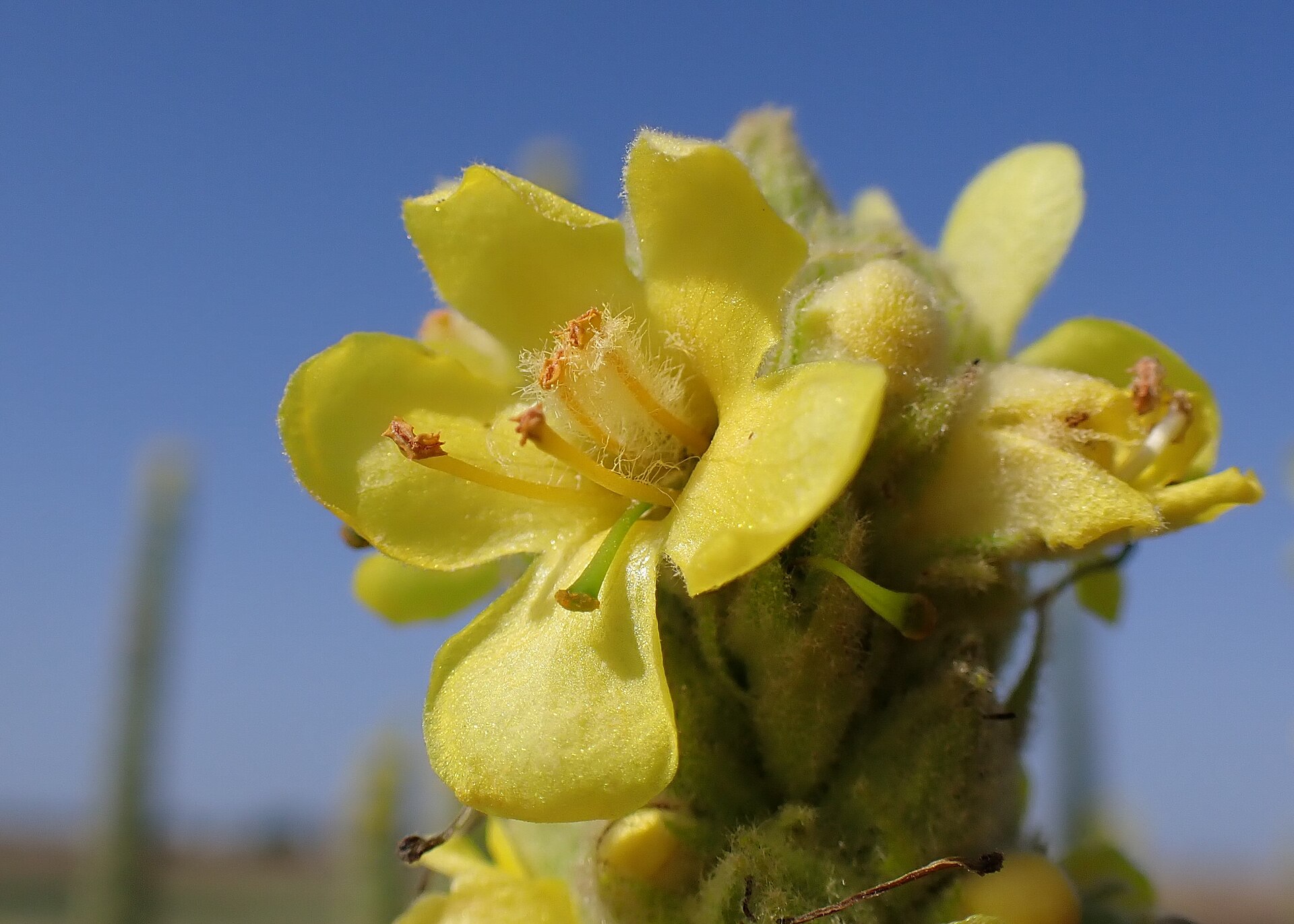
Once you have learned to see mullein, you cannot unsee it. That tall, pale spire standing alone in a gravel lot or along a railway cutting, soft grey leaves stacked at its base like felt: it is everywhere, and most people walk straight past it. This is one of the most useful plants you can learn, and it practically grows itself.
Here is how to know mullein for certain, how to grow your own, and how to harvest it so the leaves end up as mullein tea rather than compost.
What does mullein look like?
Common mullein, Verbascum thapsus (also called great mullein), is a biennial, which means it lives across two growing seasons and looks completely different in each.
First year: the rosette. A low, flat circle of large leaves pressed close to the ground. The leaves are the thing to notice: broad, soft, tapering to a point, and covered all over in fine pale hairs that give them a silvery-grey cast and a texture somewhere between felt and suede. Run a leaf between your fingers and it feels almost like flannel.
Second year: the spire. From the centre of that rosette rises a single thick, upright stalk, often taller than a person, sometimes two metres or more. The top third becomes a dense club of small, five-petalled yellow flowers that open a few at a time over weeks. After flowering it sets enormous quantities of seed and dies.
If you are looking at a tall yellow-flowered spike over a base of fuzzy grey leaves, in poor sunny ground, you are almost certainly looking at mullein.
Mullein look-alikes (and how not to confuse them)
Mullein is hard to mistake once it flowers, but the first-year rosette trips people up. The two most common mix-ups:
- Lamb's ear (Stachys byzantina). The classic confusion. Lamb's ear leaves are smaller, rounder, and much more intensely silver-woolly, genuinely plush. The plant stays low and never throws mullein's giant spike. Mullein leaves are larger, more pointed, and only thinly felted by comparison.
- Foxglove rosettes. Young foxglove leaves can look vaguely similar but are darker green, more wrinkled, and far less hairy. This one matters: foxglove is toxic. Mullein's pale, soft, evenly-felted leaf is your reassurance.
When you are foraging anything for tea or medicine, certainty is non-negotiable. If a plant does not match mullein on every point (soft pale felt, large tapering leaves, the eventual single yellow spike), leave it.
Where does mullein grow?
Mullein is a pioneer. It loves exactly the spots other plants refuse: poor, dry, stony, disturbed ground in full sun. Roadsides, gravel drives, pastures, cleared building plots, the edges of fields. It is native across Europe and Asia and has naturalised widely across North America and beyond. In a handful of regions it is classed as invasive, so if you plan to plant it, have a quick look at your local guidance first.
How to grow mullein from seed
Growing mullein is less "cultivation" and more "getting out of its way." It asks for almost nothing.
- Sow on the surface. Mullein seed needs light to germinate, so scatter it on top of the soil and press it down gently. Do not bury it. Sow in autumn or early spring.
- Pick a sunny, poor spot. Full sun, well-drained, even gravelly soil. Rich, damp beds actually suit it less. Do not bother feeding it.
- Thin if you must. Seedlings can come up thick. Thin them so each rosette has room to spread, because they get big.
- Wait for year two. Remember it is biennial. The leafy first year is doing its job; the flower spike comes the following summer.
- Let some self-seed. Leave one spike to ripen and you will have mullein for years without sowing again. Snip the spikes you do not want before they shed, or you may end up with rather a lot.
Harvesting and drying mullein
What you harvest depends on what you want.
- Leaves are best gathered in the first-year rosette or from the lower plant before flowering, when they are at their most lush. Pick clean, unblemished leaves on a dry day.
- Flowers are gathered through the second summer, a few at a time as they open. They are fiddly to collect but lovely, and traditionally favoured for the ears and for night-time coughs.
To dry, lay leaves in a single layer out of direct sun with good airflow, or hang small bundles in a dry, airy place. They are ready when they crackle and snap rather than bend. Store the dried herb in a sealed jar away from light. Done well, you will have a year's supply of leaf ready for mullein tea.
From plant to cup
That is the quiet appeal of mullein. It thrives on neglect, takes a little practice to identify and almost none to grow, and turns a roadside weed into a shelf of dried leaf for the colder months. Once you have your own dried supply, our guide to mullein tea walks through getting a clean, soothing cup, including the all-important straining step that keeps those leaf hairs out of your throat.
Frequently asked questions
Is mullein a weed or a herb?
Both, depending on who you ask. Botanically it is a wildflower that behaves like a pioneer weed, colonising disturbed ground. To herbalists it is a prized medicinal plant. In a few regions it is considered invasive, so check local guidance before planting.
How do you tell mullein from lamb's ear?
Mullein leaves are large, pointed, and grey-green with a thin felt of hairs; the plant shoots up a tall flower spike in year two. Lamb's ear leaves are smaller, rounder, and far more densely silver-woolly, and the plant stays low. When in doubt, mullein's eventual towering spike is the giveaway.
How long does a mullein plant live?
Common mullein is a biennial: it lives two years. Year one is a leafy rosette; year two it flowers, sets seed, and dies. It reseeds so freely, though, that a patch can feel permanent.
Where does mullein grow?
Almost anywhere sunny and disturbed: roadsides, gravel, pastures, old fields, cleared ground. It tolerates poor, dry soil that defeats most plants, which is exactly why you see it on neglected edges.
Keep reading
Rosa Wilder
Rosa Wilder is a clinical herbalist and lifelong forager who has grown and worked with mullein for over fifteen years.
A note on health claims. This article is for education only and is not medical advice. Mullein is a traditional herb; evidence for many uses is preliminary. Talk to a qualified healthcare provider before using mullein, especially if you are pregnant, nursing, taking medication, or managing a condition.