How to Identify Mullein: A Field Guide to Verbascum thapsus
How to identify mullein with confidence in both its first and second year: the soft felted leaves, the tall yellow flower spike, and what sets it apart from look-alikes.
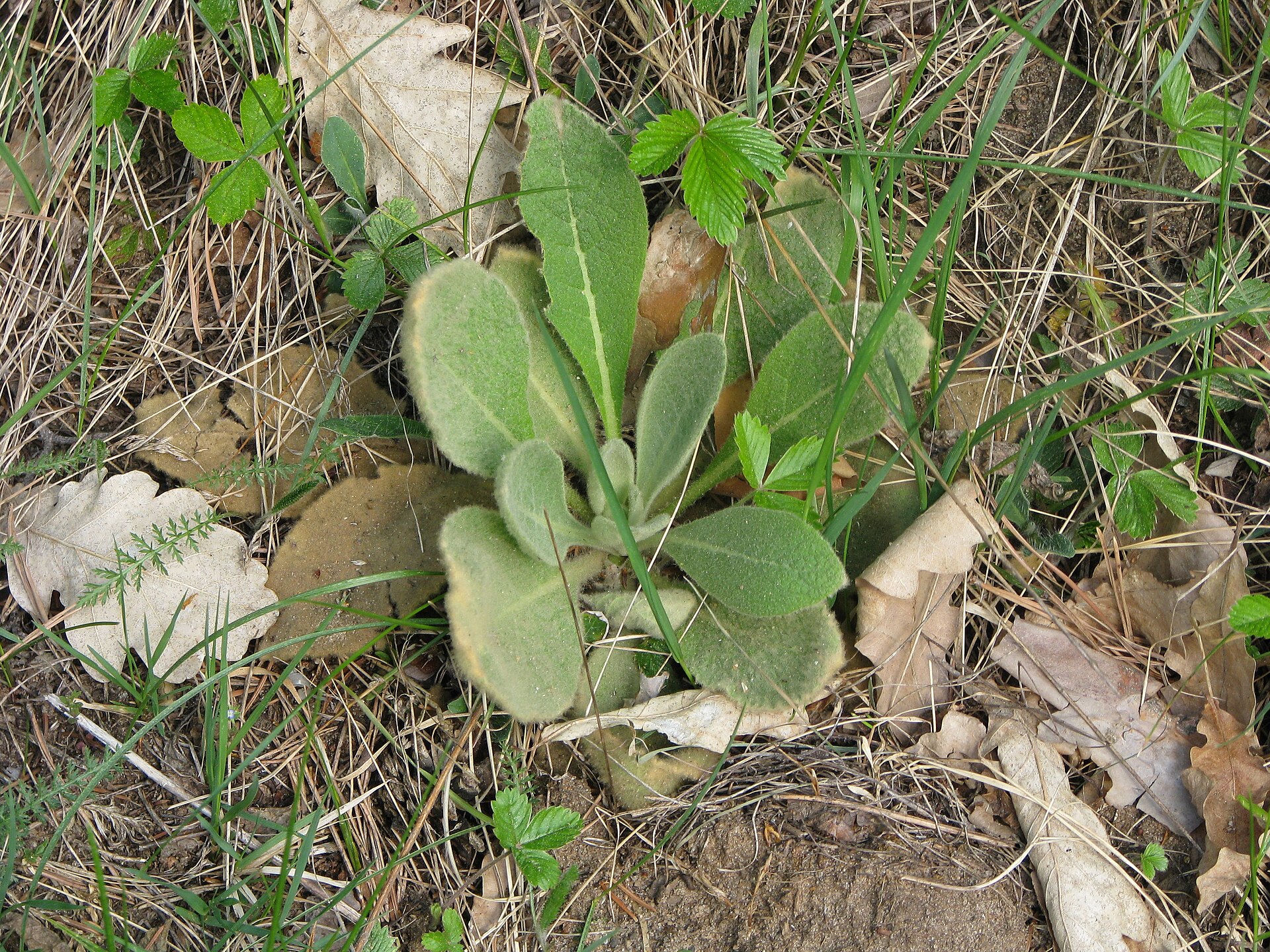
Once mullein clicks for you, it becomes one of the easiest plants to spot. That pale, woolly spire standing alone on waste ground is unmistakable. The tricky part is the first year, when it is just a rosette of soft leaves at ground level. This guide gets you confident in both stages, which matters if you plan to brew it into mullein tea.
Start with the leaves
The leaves are your most reliable clue, because they look the same in both years.
- Large and tapering. Broad at the base, narrowing to a point. The biggest lower leaves can be a foot long or more.
- Soft and felted. Covered all over, top and bottom, in fine pale hairs. The texture is the thing, somewhere between felt, flannel, and suede. Run one between your fingers and you will understand instantly why one old name is "flannel leaf."
- Pale grey-green. That fuzz gives the whole leaf a soft, silvery, dusty-green cast rather than a glossy green.
- Arranged in a rosette. In the first year the leaves radiate out in a flat circle close to the ground.
If a leaf is glossy, hairless, dark green, or deeply wrinkled, you are probably not looking at mullein.
Then the flower spike (second year)
In its second year, mullein transforms. From the centre of the rosette rises a single thick, upright stalk, often well over head height. The top third becomes a dense, club-like spike of small yellow flowers, each with five rounded petals. The flowers do not all open at once; a scattered few bloom at a time, working up the spike over weeks. After flowering, the spike dries to a dark brown rod studded with seed capsules and stands through winter.
That lone tall spike over a base of fuzzy grey leaves, in a dry sunny spot, is about as clear an ID as botany offers.
Where it grows (a clue in itself)
Habitat is part of identification. Mullein is a pioneer that colonises poor, dry, stony, disturbed ground in full sun: roadsides, gravel, old fields, cleared lots, railway edges. If you find a candidate thriving in rich, damp, shady soil, be a little more skeptical; that is not mullein's natural haunt.
A quick identification checklist
You can be confident it is common mullein when it ticks all of these:
- Leaves large, tapering, and soft-felted with fine pale hairs
- Pale grey-green colour, not glossy
- First-year plants in a flat ground rosette
- Second-year plants with a single tall stalk and a spike of small yellow flowers
- Growing in poor, dry, sunny, disturbed ground
When to be careful
The first-year rosette is where people slip up, because a few other plants form soft rosettes. The two worth knowing are lamb's ear and, more importantly because it is toxic, young foxglove. We cover these in detail in mullein look-alikes and mullein vs lamb's ear. The rule that keeps you safe: if a plant does not match mullein on every point above, do not pick it for tea or medicine. For the full picture of the plant, its biology, uses, and folklore, head back to our guide to the mullein plant.
Frequently asked questions
What does a mullein plant look like?
Large, soft, silvery grey-green leaves with a felt-like coating of fine hairs, arranged in a low rosette in year one. In year two a single thick stalk rises, often taller than a person, topped with a club of small five-petalled yellow flowers.
How can you tell mullein from other plants?
The combination is the giveaway: pale, evenly felted, tapering leaves plus a single tall yellow flower spike, growing in poor, disturbed, sunny soil. The felt-soft leaf rules out most look-alikes, and the towering spike is unlike anything it is confused with.
What time of year does mullein flower?
In its second summer. The flower spike opens a few blooms at a time over several weeks through mid-to-late summer, then sets seed and the plant dies.
Keep reading
Rosa Wilder
Rosa Wilder is a clinical herbalist and lifelong forager who has grown and worked with mullein for over fifteen years.
A note on health claims. This article is for education only and is not medical advice. Mullein is a traditional herb; evidence for many uses is preliminary. Talk to a qualified healthcare provider before using mullein, especially if you are pregnant, nursing, taking medication, or managing a condition.